
Call: 07971645085
 Send Inquiry
 Send Inquiry
Rubber O Ring
Price 5.0 INR/ Piece
MOQ : 100 Pieces
Rubber O Ring Specification
- Thickness
- 12 mm to 60 mm Millimeter (mm)
- Standard
- DIN, ISO, or as per OEM requirements
- Tolerance
- 0.10 Millimeter (mm)
- Usage
- Sealing
- Material
- Rubber
- Shape
- Round
- Hardness
- 40-70 Shore A
- Temperature
- Upto 85 Celsius (oC)
- Function
- Sealing
- Color
- Black
- Application
- Automotive engines, Tractors, Compressors
- Packaging Type
- Box or Custom Packaging
- Corrosion Resistance
- Yes
- Surface Finish
- Phosphated or Chrome Plated
- Diameter Range
- 40 mm to 200 mm
- Type
- Compression Ring, Oil Ring, Scraper Ring
- Color
- Grey / Black
Rubber O Ring Trade Information
- Minimum Order Quantity
- 100 Pieces
- FOB Port
- Gurgaon
- Payment Terms
- Cash in Advance (CID)
- Supply Ability
- 200000 Pieces Per Month
- Delivery Time
- 3-5 Days
- Main Domestic Market
- All India
About Rubber O Ring
A Rubber O-Ring is a doughnut-shaped (toroidal) mechanical seal designed to be seated in a groove and compressed during assembly between two or more parts, creating a leak-proof barrier. They are among the most common and versatile seals used in machinery worldwide due to their efficiency, low cost, and simple installation.
- Sealing Principle: An O-ring works by deforming its elastomeric material under installation and system pressure. When placed in a "gland" (groove), the ring is squeezed to fill tiny gaps, forming a physical barrier against fluids or gases.
- Self-Energizing: As system pressure increases, the O-ring is forced toward the low-pressure side of the groove, further deforming it and actually increasing the tightness of the seal.
- Static vs. Dynamic:
- Static: Used between parts that do not move relative to each other (e.g., valve seats or flanges).
- Dynamic: Used where there is relative motion, such as reciprocating pistons or rotating shafts in pumps and motors.
Common Materials & Their Uses
Selecting the right material is critical for chemical compatibility, temperature resistance, and durability.
- Viton (FKM/Fluorocarbon): Preferred for high-temperature (-40C to +250C) and harsh chemical environments, commonly used in aerospace and automotive fuel systems.
- Silicone (VMQ): Best for extreme temperature flexibility (both hot and cold) but has poor abrasion resistance. Often used in medical, food processing, and electronic applications.
- EPDM: Ideal for exposure to water, steam, ozone, and weathering. It is commonly found in plumbing and outdoor equipment but is not suitable for petroleum-based products.
- Neoprene (CR): Offers good resistance to ozone, sunlight, and some oils; frequently used in refrigeration and automotive sectors.
Specifications & Sizing
O-rings are primarily defined by three key dimensions: Inner Diameter (ID), Outer Diameter (OD), and Cross-Section (CS) or thickness.
- Standard Systems: Common standards include AS 568 (American/Aerospace), ISO 3601 (International), and JIS B 2401 (Japanese).
- Hardness: Measured in Shore A durometer. A rating of 70 Shore A is standard for most general applications, while higher ratings (e.g., 90) are used for high-pressure systems to prevent the ring from being pushed into gaps (extrusion).


Tell us about your requirement

Price:
Quantity
Select Unit
- 50
- 100
- 200
- 250
- 500
- 1000+
Additional detail
Mobile number
Email

More Products in Rubber O Ring Category

Black O Ring Kit
Minimum Order Quantity : 100 Pieces
Hardness : 70 5 Shore A
Material : Nitrile Rubber (NBR)
Temperature : 30C to +110C
Application : Hydraulic, Pneumatic, General Maintenance
Shape : Round
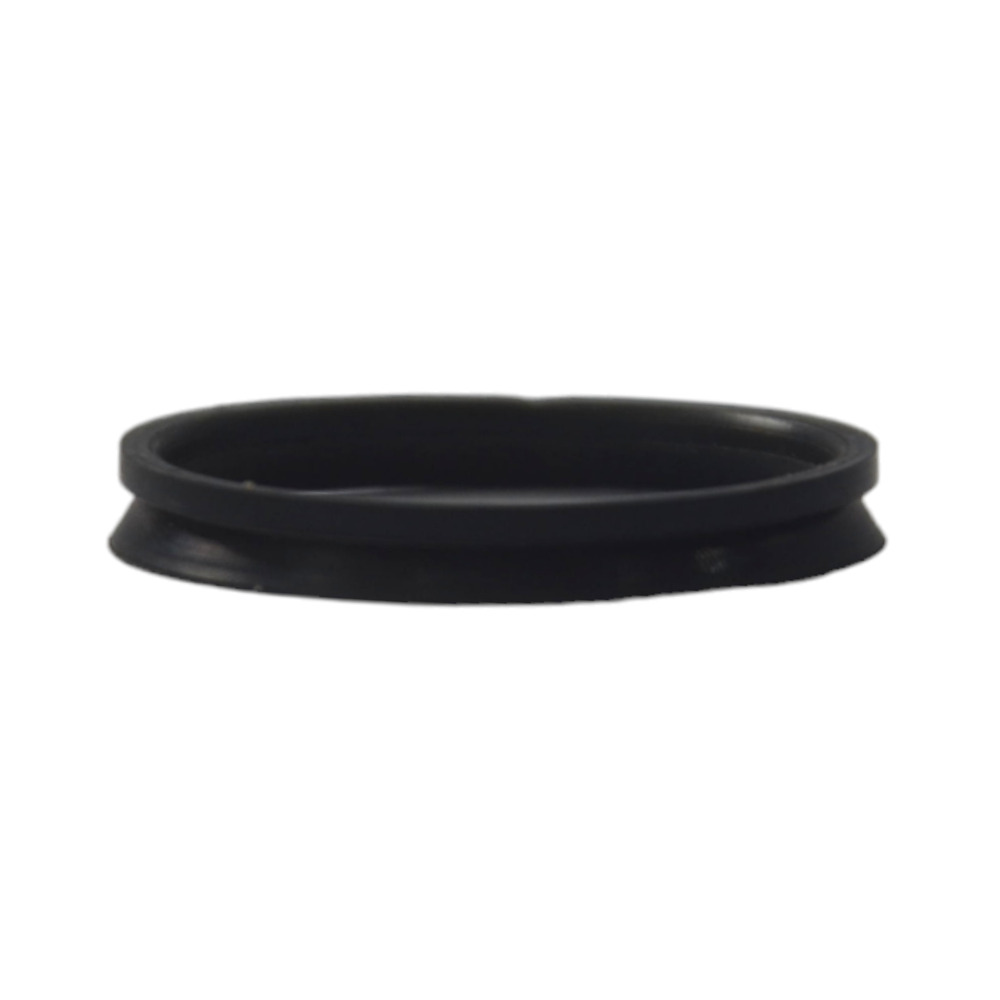
Black V Ring
Minimum Order Quantity : 100 Pieces
Hardness : 70 5 Shore A
Material : Nitrile Rubber (NBR)
Temperature : 30C to +110C
Application : Rotary Shaft Seals, Automotive, Industrial Machinery
Shape : VShaped

Sealing Ring Set
Minimum Order Quantity : 100 Pieces
Hardness : 65 5 Shore A
Material : Nitrile Rubber (NBR)
Temperature : 30C to +120C
Application : Automobile, Hydraulic, and Pneumatic Systems
Shape : Round

Contact Details
GA Auto Components
GST : 06AAUFG2738H1Z3
- Khasra No. 338,Basai Road, Near Basai Railway Flyover, Basai,Gurugram - 122006, Haryana, India
- Phone :07971645085
 Send Inquiry
Developed and Managed by Infocom Network Private Limited.
